
Clay County Lookup Record Coverage
Choose the record by the fact it can prove. A property record names an assessed owner, while a court docket identifies a party in a case. A voter tool verifies supplied identity data. Vital certificates document family events under separate access rules. The distinctions keep a resident lookup from turning one weak match into a false conclusion.
| Record | What it can confirm | Official source | Access |
|---|---|---|---|
| Property assessment | Current assessed owner, mailing address, situs, parcel ID, sale references | Clay Property Appraiser | Free search and monthly roll data; ownership is not occupancy |
| Recorded document | Party role, instrument, date, book/page, legal description | Clay Clerk Landmark | Free index and some unofficial images; certified copies from Clerk |
| Voter registration | Match, status, precinct, and polling geography | VoterStatusClay | Identity inputs required; protected data withheld |
| Court case | Party role, case number, filing events, public disposition | Clay Clerk and Fourth Judicial Circuit | Free index; restricted files omitted |
| Vital record | Birth, death, marriage, or dissolution facts | Florida and Clay health offices; Clerk | Eligibility, ID, and certificate fees vary |
| Business or license | Entity role, credential, status, and listed location | Sunbiz or state licensing board | Free index; address may be an affiliation |
Begin with the narrowest known fact. A parcel number beats a common name. A case number beats a caption guess. For a family event, use the record type and custodian instead of forcing the question through a general name search.
Control Clay County Namesakes
A same-name hit is a lead, not an identification. The Property Appraiser accepts a full, partial, first, or last owner name, so results may expose a middle initial, mailing address, parcel number, and co-owner. Landmark tells users to try spelling variations. Save the exact form from each index before testing another source.
Compare at least two independent anchors: middle name or initial, spouse or co-owner, parcel and legal description, court role, business role, county, and chronology. Dates have different meanings. A deed execution date, recording date, parcel roll date, filing date, and license expiration date do not describe the same event.
Owner is not occupant. A matching mailing address, situs, and homestead status strengthen owner-occupancy evidence, but do not name every household member.
Read Clay County Court Results
Clay County is in Florida's Fourth Judicial Circuit with Duval and Nassau counties. Reach the trial-court search from the Clay Clerk records hub, since vendor links may change. Search by case number when known. Otherwise test a party or defendant name and its variants, then narrow by court or case type and filing-date range. Citation number can identify a traffic matter.
| Case identity | Case number, division, caption, filed date, status, and type |
|---|---|
| People and roles | Parties, their case roles, counsel, and judge when posted |
| Event trail | Register of actions, docket dates, public charges, disposition, or sentence when applicable |
| Document access | Public links when remote access permits; other public files may require a counter or records request |
Sealed, expunged, juvenile, adoption, and confidential family material is absent or restricted. Courthouse terminals may show a public document unavailable remotely, but never override a seal. Ask the Clerk for a named case or document, not for staff to decide whether two people are the same.
For appeals, the Florida ACIS portal searches by court, case number, title, category, filed date, and originating trial-case number.
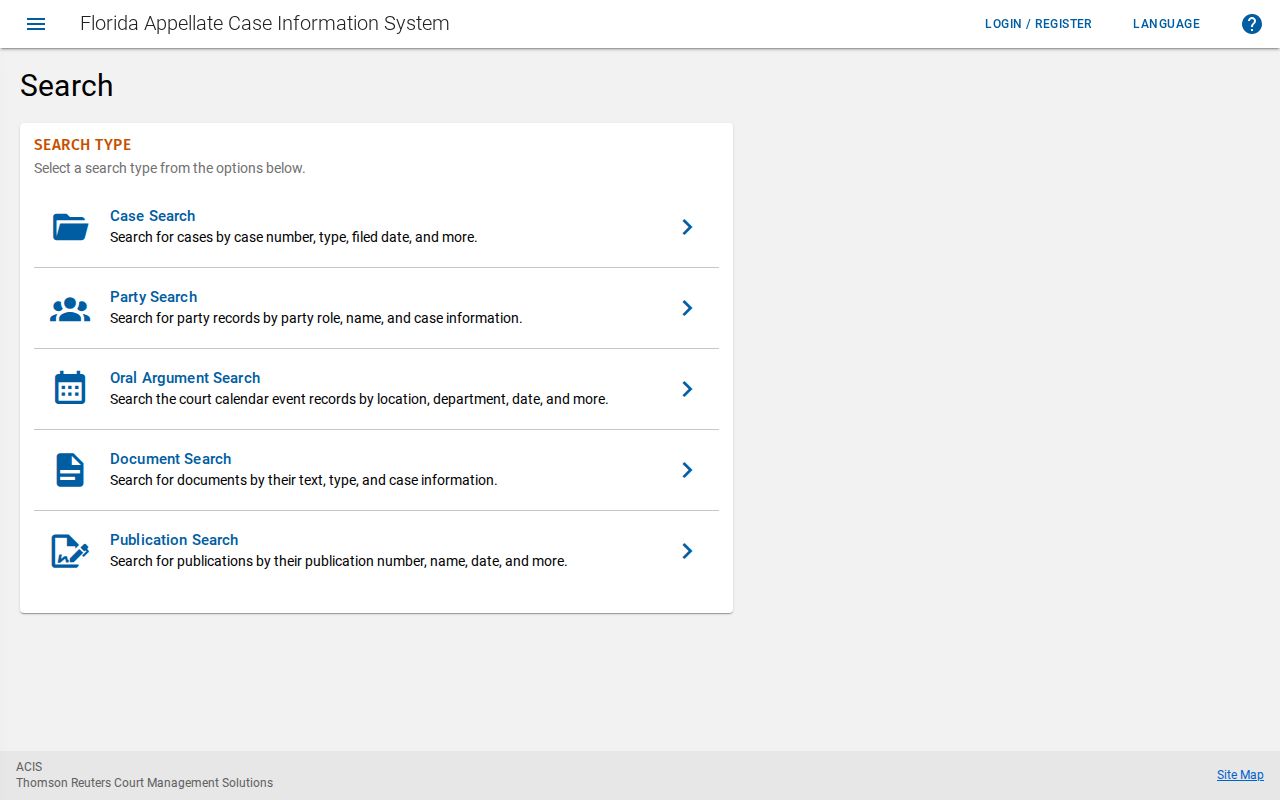
The appellate screen can connect an appeal to the originating case, which is far safer than matching only a party name.
Verify a Clay County Resident
A careful verification chain moves stable identifiers forward and stops when the evidence cannot separate namesakes. The property roll and deed index are useful for an owner. Court, voter, business, or license records can add an independent point, but each must be read within its stated purpose.
- Search the Property Appraiser by full or partial owner name. Save the parcel ID, situs, mailing address, co-owner, and deed reference.
- Carry the parcel ID or deed book and page into Landmark. Confirm party role, legal description, instrument number, and recording date.
- Search a court name variant or use the authenticated voter check only when the lawful identifying inputs are available.
- Compare dates, initials, county, roles, and addresses. Do not merge records if two independent anchors do not agree.
- Order the identified public document or certified copy from its custodian when the result will be relied upon.
- Docket
- The dated list of filings and events in a court case, not the full evidence or every underlying document.
- Index versus image
- An index summarizes searchable fields. An image displays the record itself, though an online image may still be unofficial.
- Certified copy
- A custodian-issued copy authenticated as a true copy, usually with a stated copy and certification charge.
Clay Resident Vital Record Checks
Florida vital records use forms and eligibility rules, not an open modern birth-name index. The Florida Department of Health in Clay County provides local birth and death certificate service, while the state Bureau handles statewide certificates. Birth records under 125 years old are confidential. Death records without cause are generally available, but cause-of-death information remains confidential for 50 years except to eligible applicants.
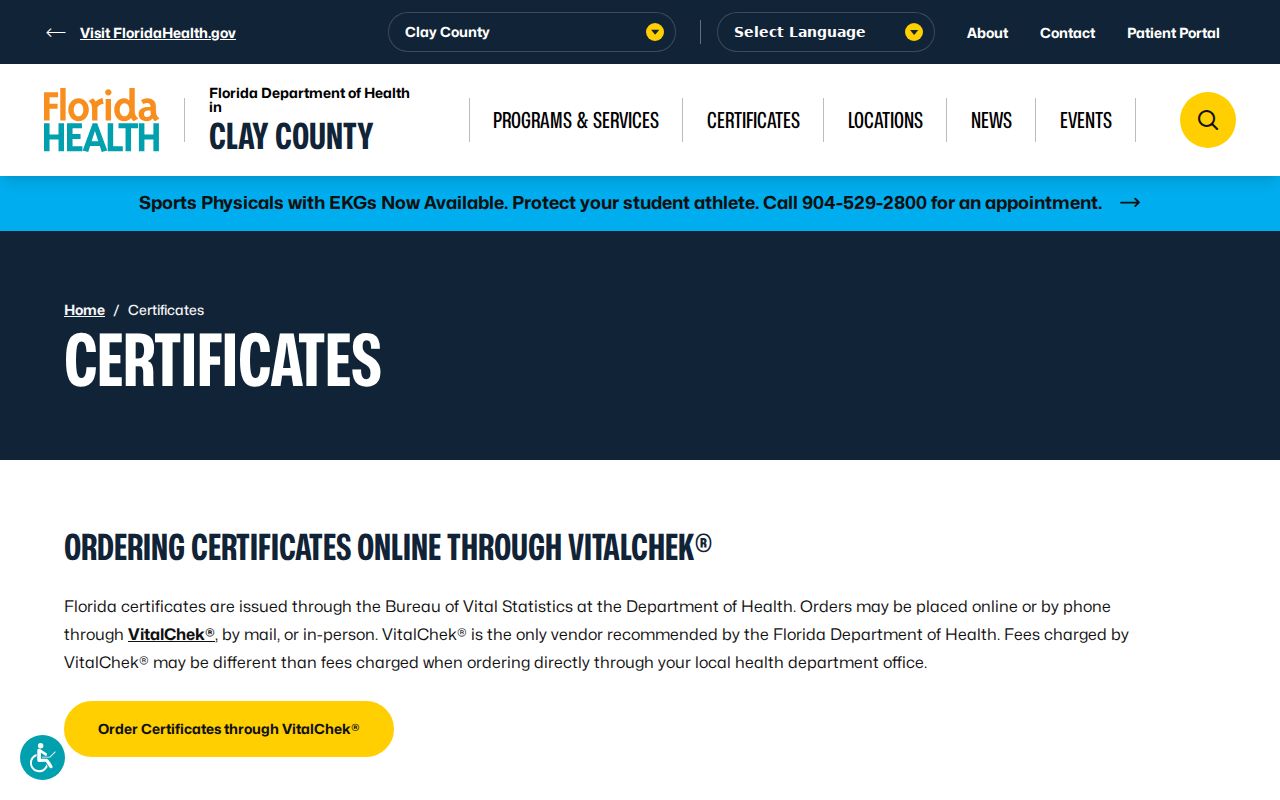
The local certificate screen directs users to the right official service rather than an inferred family link.
State marriage and dissolution abstracts generally begin June 6, 1927. A marriage abstract lists the spouses, date, and county, while a dissolution abstract summarizes the event. The underlying Clay license or court file comes from the Clerk. A recent dissolution may not yet have reached the state, so the Clay docket is the better first check.
The state applications list DH726 for birth, DH727 for death, DH261 for marriage, and DH260 for dissolution. Use the official forms index to confirm current identification, release, payment, mail, and counter requirements.
Find Clay County Family Links
An heir search starts with Clay probate. A public petition, notice, appointment, or docket may identify a personal representative, heir, or interested party. Pair those names with the death record and final deed. Estates can explain a title transfer that does not look like an ordinary sale.
Florida adoption files are confidential. A person seeking a birth parent should use the Florida Department of Children and Families Adoption Reunion Registry, where participation and intermediary steps turn on consent and eligibility. Attempting to bypass a sealed court file is not a lawful shortcut.
For a former classmate, the Orange Park Library's yearbooks, newspapers, and local-history sources are safer first steps than assuming an old address is current. Clay Historical Archives' Goldmine of Names links 75 transcribed lists to originals. The Clay County city directory collections can establish an older spelling or address before a modern lookup begins.
Note: Probate and death records can reconnect an estate trail to heirs, but a listed address may no longer be current.
Confirm Clay Resident Affiliations
Business and professional systems answer narrow questions about a filed role or credential. Sunbiz can show entity status, document number, filing date, principal and mailing addresses, registered agent, officers or managers, and annual-report images. Principal, registered-agent, and officer addresses have different legal functions. None alone proves a home address.
Use the Florida Division of Corporations search for entity and filing routes.
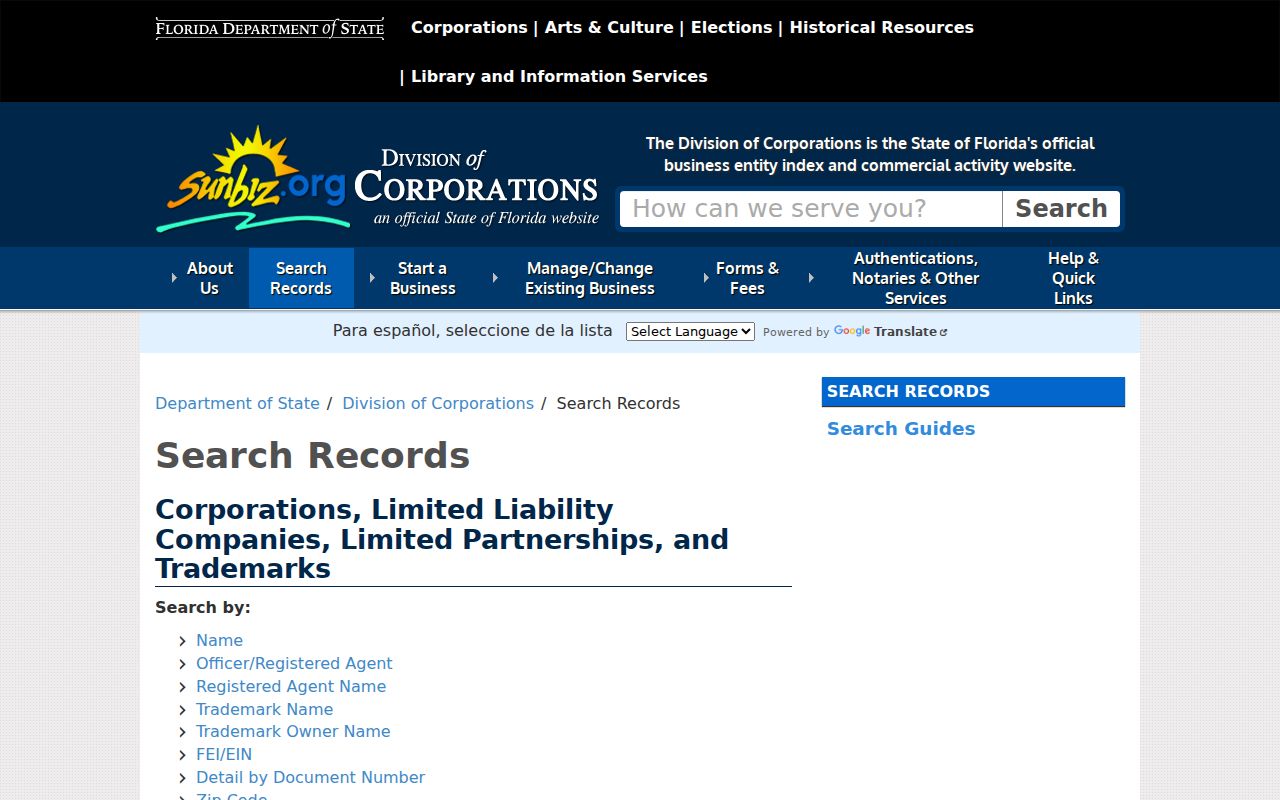
The state search modes let a researcher test the entity name or a filed person's role without treating the business address as residence proof.
DBPR accepts a name, license number, city or county, or license type. It can include historic licenses and show the category, number, status, dates, location, and public disposition information. Health professionals use the Florida MQA search.
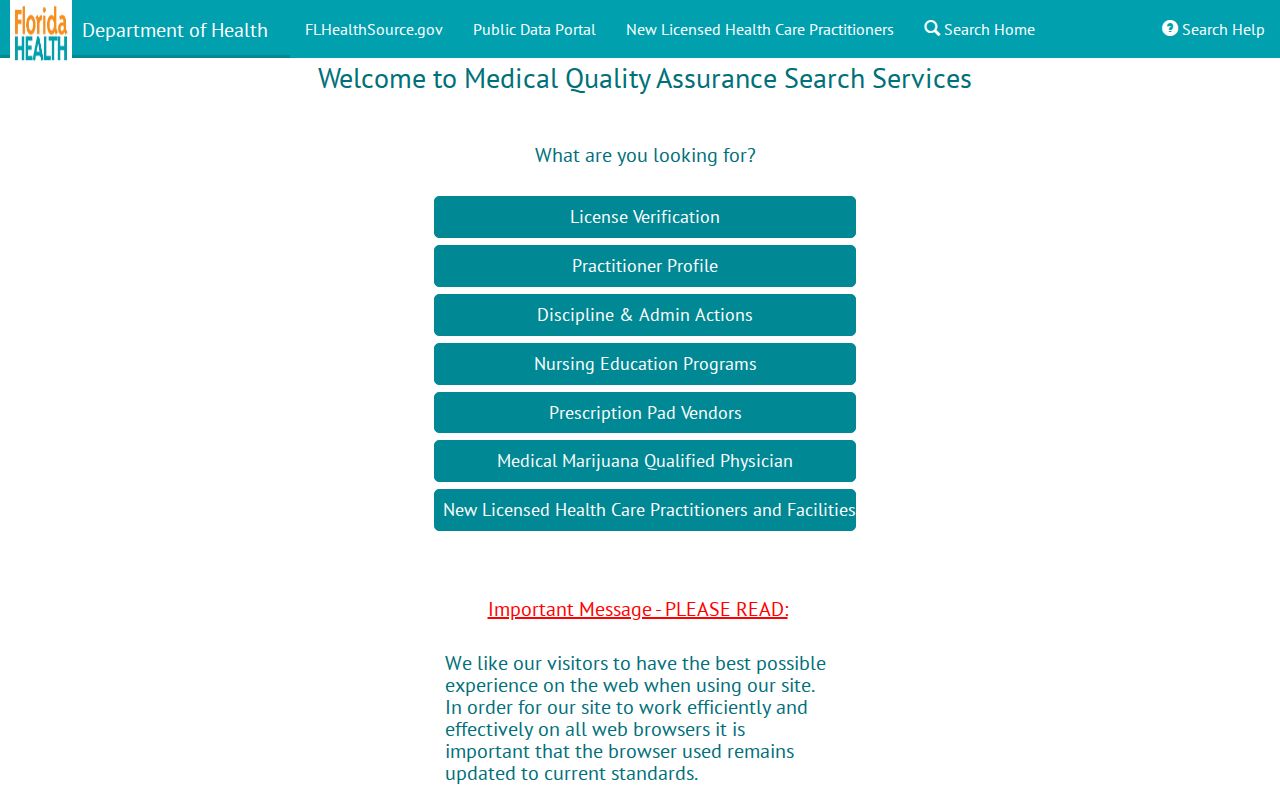
MQA results document a credential and listed location, which must be compared with another source before identifying a resident.
Lawyer records use the Florida Bar member directory.
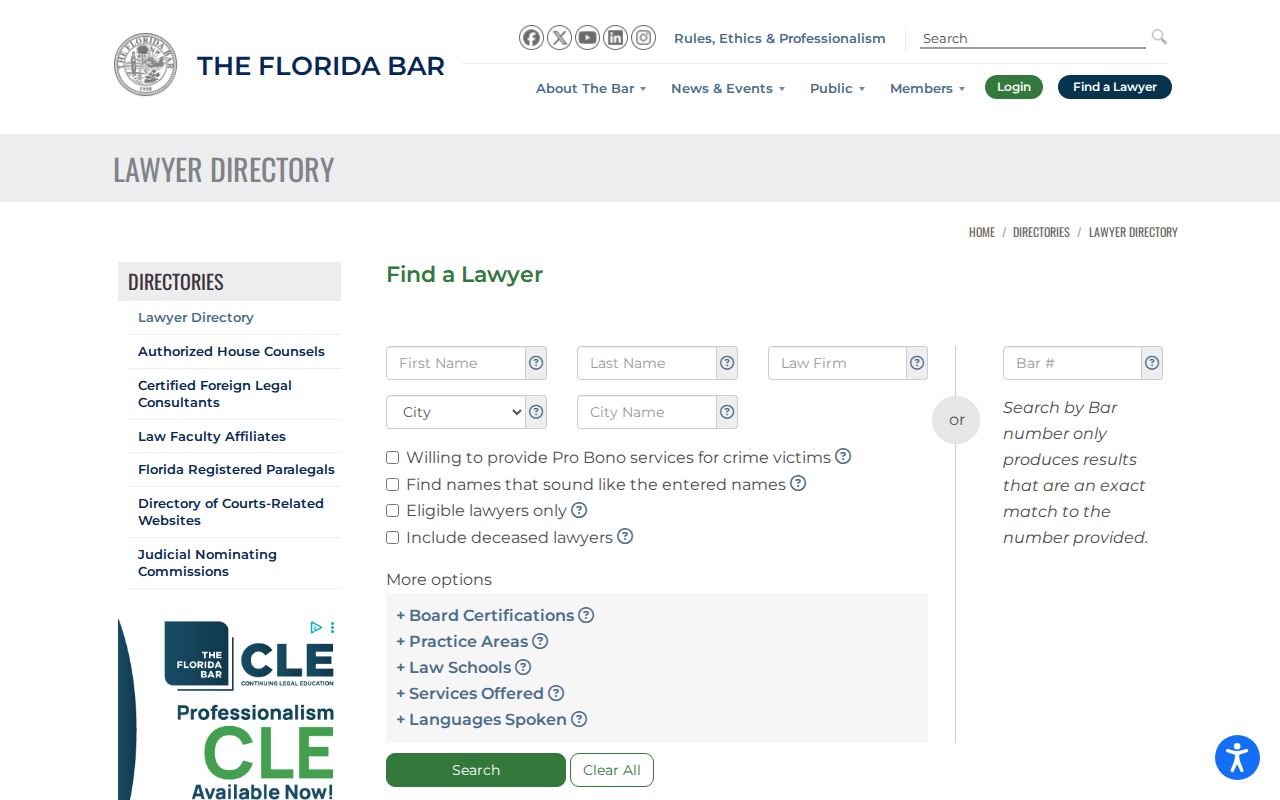
The Bar directory is an official membership source, but its public contact details still describe a professional record rather than a household roll.
Request Missing Clay Lookup Records
When a portal stops, use the custodian's other channels. The Clerk accepts focused requests through publicrecords@clayclerk.com, by mail or counter at 825 N. Orange Avenue in Green Cove Springs, and by phone at 904-284-6302. The courthouse is open weekdays from 8 a.m. to 5 p.m. Ask for a named record series, case or instrument number, date range, and electronic delivery when available.
Florida Public Records Law, chapter 119, does not ordinarily require a purpose statement. A custodian may charge lawful copying or extensive-use costs and must withhold exempt material. Request a cost estimate before broad clerical or technology work. Correct an assessment with the Property Appraiser, an index issue with the Clerk, voter data with the Supervisor of Elections, and license or entity data with its state division.
Clay County Resident Lookup Limits
Open records still contain protected categories. Florida's Address Confidentiality Program shields qualifying victims of domestic violence and stalking under sections 741.401 through 741.465. Section 119.071 contains address exemptions for specified people, and protected voter records do not appear merely because other voter fields are public. Voting history shows participation, never ballot choices.
A government index can be outdated or wrong. Submit a correction or exemption claim to the office that owns the record. Florida's Digital Bill of Rights applies only to covered large controllers and cannot erase a lawful deed or court docket. Commercial compilation opt-outs also do not change the source record.
Lawful use. Use a Clay County resident lookup only for lawful personal research. Florida law prohibits stalking, cyberstalking, harassment, and using public-record information to facilitate an offense.